
What is Arthrodesis?
Arthrodesis is surgery to fuse an injured or painful joint. Some injuries that can not be repaired are better managed by fusing the joint in order to restore limb function. When a joint is chronically painful then fusion can eliminate the pain. As you might expect fusion of a joint can have an effect on mobility but this varies from joint-to-joint. Some of the most common fusions we perform (of the carpus for example) have very little impact on overall mobility.
A full return to activity is expected after pancarpal arthrodesis
Pancarpal & Pantarsal Arthrodesis
Pancarpal Arthrodesis
This is complete fusion of the carpus (the joint between the paw and the elbow in the forelimb). Although the joint is fused solid, overall limb function remains very good due to movement in the elbow and the shoulder. To the untrained eye a dog or cat with a fused carpus will walk and run normally. Pancarpal arthrodesis is most commonly performed for hyperextension injuries of the carpus and fractures of the carpal bones.
Pantarsal Arthrodesis
This is complete fusion of the tarsus/hock (the joint between the paw and the knee in the hindlimb). This has a more obvious effect on gait than pancarpal arthrodesis but dogs still regain very good mobility, being able to run around after surgery. Pantarsal arthrodesis is performed in dogs with severe hock arthritis and injuries such as Achilles tendon injuries.

Pancarpal Arthrodesis
Intertarsal/partial tarsal arthrodesis
This is fusion of the minor low-motion joints of the hock. This is most often performed to manage ligament injuries and joint instabilities. Since the main joint of the hock is not fused, the effects on mobility are minimal.
How is arthrodesis performed?
For any joint being fused there are several key steps. The cartilage needs to be removed from the joint and then the joint needs to be stabilised with a plate and screws. In some situations we will recommend using silver-coated plates that reduce the risk of infection. Typically bone graft is packed in and around the joint to speed-up the fusion.
Why Moores Ortho?
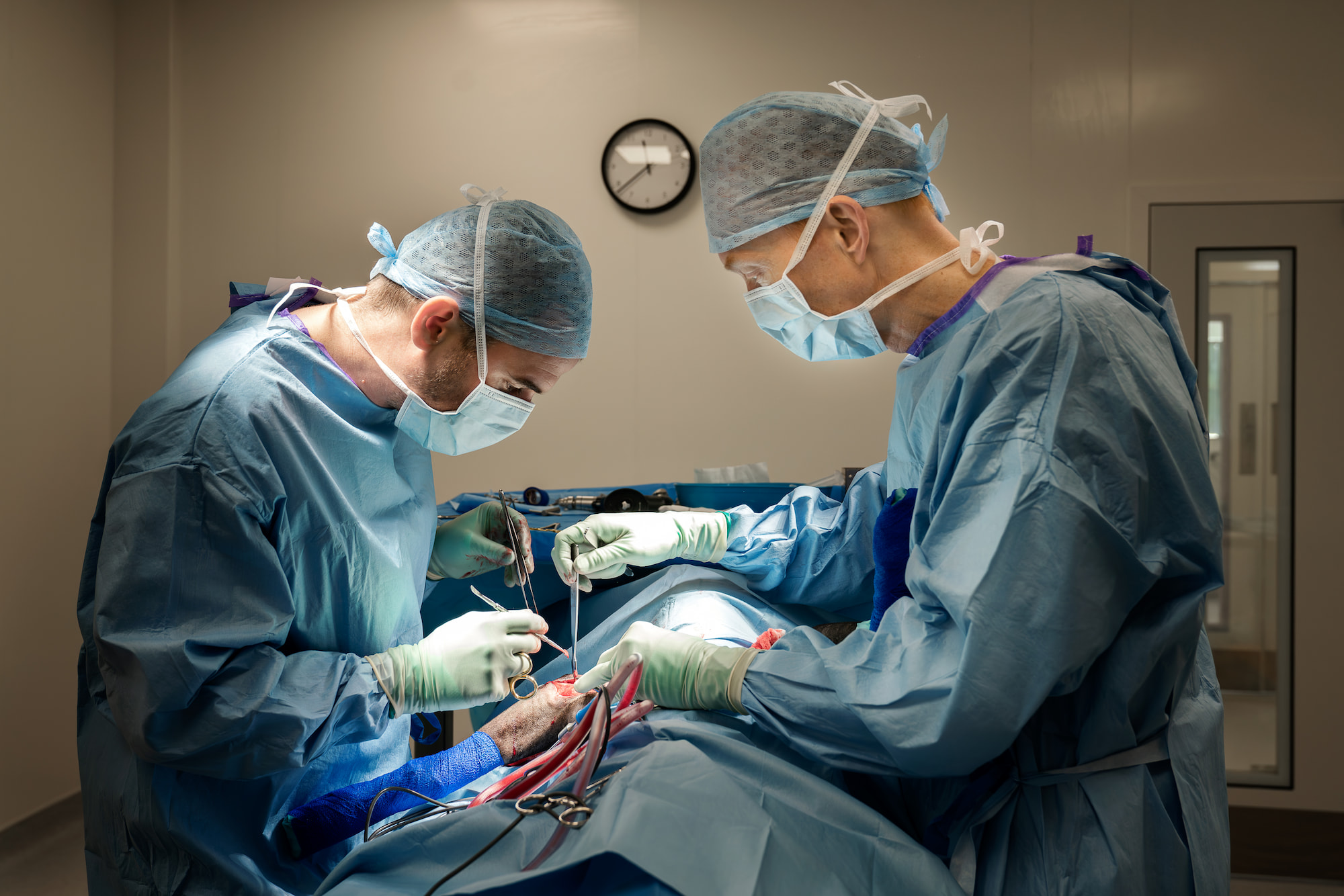
Arthrodesis is a major surgery that will benefit from the input of a Specialist surgeon. However, carpal and tarsal arthrodeses are routine procedures for the Specialist surgeons at The Moores Orthopaedic Clinic. Furthermore, our clinic is designed specifically for complex procedures such as these. Our surgical theatres have been designed to human orthopaedic standards with their own HEPA-filtered ventilation system to minimise the risk of infection.
At the Moores Orthopaedic Clinic we can offer:
- Expert assessment of your pet to ensure surgery is right for them
- Highly experienced specialist surgeons
- A purpose-built modern clinic with facilities designed to minimise the risk of complications after orthopaedic surgery
- Detailed aftercare instructions and 24/7 support during recovery
- Personal and professional service
- Very competitive fixed-prices and a surgical guarantee
What can I expect before and after surgery?
We will fully assess your dog before surgery and ensure that an arthrodesis is the appropriate procedure for your pet. We will probably need to take further x-rays before surgery. Your dog is likely to stay in the clinic for a night after surgery before being discharged with pain killers and comprehensive instructions for rest. Strict rest (no running, jumping, stairs, short lead walks for toileting only) will be important for at least the first 8 weeks after surgery. We will be available 24/7 to support you and offer advice. We will ask to see your dog again 4-8 weeks after surgery but will see you more frequently if required.
From 8-12 weeks after surgery exercise will be gradually increased. By 12 weeks after surgery we expect dogs to be significantly more comfortable than before surgery. Dogs continue to improve beyond this point with most dogs being at their best by around 10 months after surgery.

Make an enquiry
Request more
information