

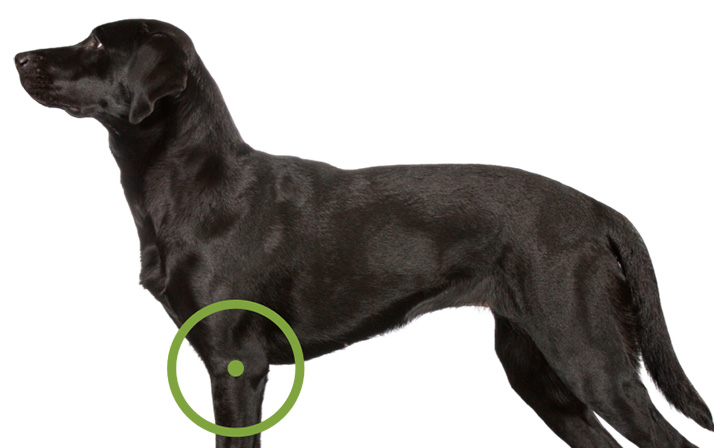
Have you noticed your dog limping on their front leg, slowing down on walks, or hesitating to come down stairs or jump out of the car? Perhaps you see it more after exercise or first thing in the morning when they get up from rest? These changes are easy to overlook, especially if they come on gradually, but they can be signs of elbow problems. Sore elbows in dogs are more than just a minor nuisance. If left untreated, they can cause significant pain, reduce mobility, and lead to long-term joint damage.
In this blog, we’ll look at how to spot the signs of elbow pain in dogs, how these problems are diagnosed and the treatment options available, from simple lifestyle changes to surgical procedures such as total elbow replacement.
Understanding the Elbow Joint
The elbow is in the front leg and just like in people it is formed of three bones: the humerus, radius and ulna. These bones come together to create a hinge that allows the front leg to flex and extend, enabling dogs to walk, run, jump and play. For this joint to function properly, the bones must align perfectly, supported by ligaments and surrounding muscles. Because of this complexity and the forces placed on it during movement, the elbow is particularly vulnerable to developmental disorders, injuries and wear and tear over time. Even minor misalignments can cause pain and contribute to joint disease.
Spotting the Signs of Elbow Pain
Dogs are good at hiding discomfort, so signs of elbow pain can be subtle at first. One of the most common symptoms is lameness (limping), which may come and go or appear worse at certain times, such as after exercise or when your dog gets up after a long rest. Some dogs seem to “warm out” of their limp after moving around, while others become more noticeably lame after activity. Dogs with elbow problems will tend to nod their head and look uneven when they walk.
You might also notice behavioural changes. Dogs with sore elbows are often reluctant to jump into or out of the car or onto/off furniture, struggle with stairs, or take longer to rise from lying down. They may turn awkwardly, walk stiffly, or lose interest in games they had once loved. Other physical signs include swelling or thickening around the joint, reduced range of motion, and pain when the area is touched. Some dogs even lick or chew at their elbows in response to discomfort.
Common Causes of Elbow Problems
There are several reasons why dogs develop sore elbows. In young dogs, especially in breeds like Labradors and Rottweilers, elbow dysplasia is a leading cause. This term covers a group of developmental conditions where the elbow joint doesn’t form properly, including fragmented coronoid process (FCP, aka coronoid disease), osteochondritis dissecans (OCD), and ununited anconeal process (UAP). These problems cause uneven wear within the joint, leading to pain and early arthritis.
In older dogs, or those with a history of injury, osteoarthritis is common. This degenerative condition results from cartilage wear and joint inflammation, often secondary to previous elbow dysplasia or trauma. Acute injuries such as ligament sprains, muscle strains, or blunt trauma can also affect the elbow, as can pressure-related problems like hygromas and calluses in dogs that rest on hard surfaces.
How Elbow Problems Are Diagnosed
If you think your dog has an elbow issue, a veterinary assessment is essential. Your vet will start by taking a detailed history, asking about when the lameness began, how it has progressed, and whether it worsens after certain activities. They will then perform a physical examination by checking for pain, swelling, and reduced motion, and watching how your dog walks to identify gait changes.
Imaging is often the next step. X-rays are commonly used to look for signs of elbow dysplasia, fractures, or arthritis. In more complex cases, a CT scan may be recommended for a clearer view of the joint and to look for signs of elbow dysplasia. In some situations, an arthroscopic (keyhole) procedure can be performed, which allows the vet to both assess and treat certain elbow conditions at the same time.
Treatment Options
Treatment depends on the cause and severity of the problem, as well as your dog’s age and lifestyle. In many cases, vets begin with conservative management, including rest, controlled exercise, physiotherapy, weight control, and pain relief using non-steroidal anti-inflammatory drugs (NSAIDs). These measures can help reduce pain and improve mobility.
For more serious or persistent issues, surgery may be needed. Arthroscopy is a minimally invasive procedure used to remove bone or cartilage fragments from the joint and smooth damaged areas. In some cases, corrective bone surgery (osteotomy) can help to improve joint alignment. For dogs with severe, end-stage, arthritis, total elbow replacement may be an option.
At The Moores Orthopaedic Clinic our surgeons Andy Moores and Chris Jordan commonly assess and treat elbow problems. Andy is one of only a few specialists in the UK trained to perform TATE third-generation elbow replacements, offering hope to dogs who would otherwise struggle with lifelong pain.
Prognosis and Long-Term Outlook
The outlook for dogs with elbow problems varies. Factors such as age, weight, severity of disease, and the presence of arthritis all influence recovery. Many dogs respond well to early treatment and can return to an active, pain-free life. Even in more advanced cases, surgical options can dramatically improve comfort and mobility, provided owners follow strict post-operative care and rehabilitation plans.
Can Elbow Problems Be Prevented?
Some elbow conditions, particularly elbow dysplasia, are genetic and cannot be completely prevented. However, there are steps you can take to reduce the risk or delay the onset of joint disease. Keeping your dog at a healthy weight is one of the most effective ways to reduce strain on their elbows and regular, balanced exercise helps maintain strong muscles and joint support.
Final Thoughts
If your dog is limping or showing signs of discomfort in their front legs, don’t ignore it. Early diagnosis and treatment can make a huge difference to their comfort and mobility. From simple lifestyle changes to advanced surgical options like total elbow replacement, there are many ways to help dogs with sore elbows live happy, active lives.
At The Moores Orthopaedic Clinic, we can offer all appropriate treatment options and are very happy to assess your dog’s elbow.
Contact us to find out more: Contact Moores Orthopaedic Clinic – Orthopaedic Vets